

THERMODYNAMIC SECURITY
How Mining Rigs work
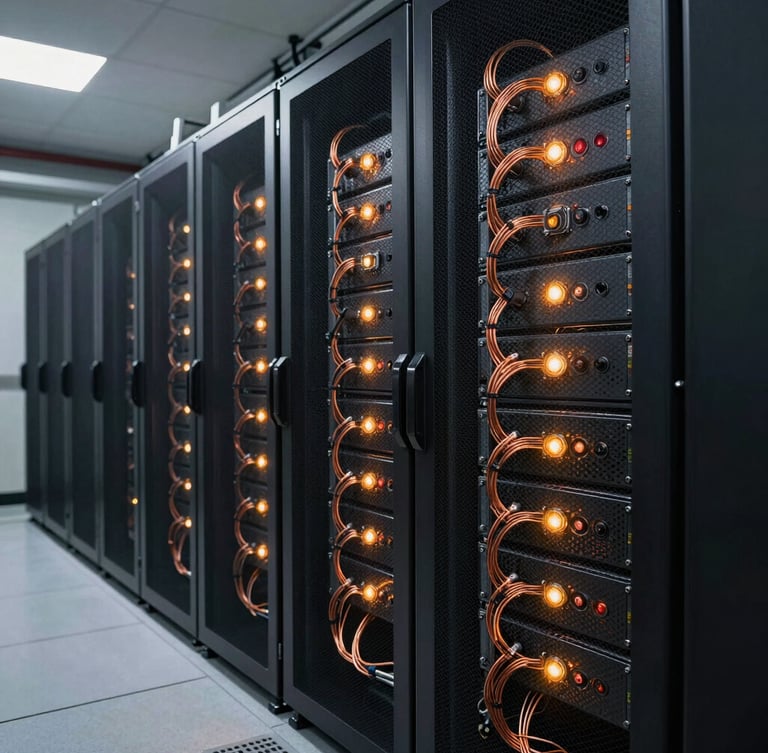
Crypto mining is not a financial loophole. It is a physical, thermodynamic mechanism that anchors digital consensus in real-world energy consumption and computational difficulty.
STEP-BY-STEP MECHANICS
The Lifecycle of a Block
From transaction broadcast to cryptographic validation, understand how hardware and mathematics collaborate to secure decentralized networks without relying on speculation.
01 / HASHING
02 / VALIDATION
03 / EMISSION
Cryptographic Race
Consensus Check
Reward Distribution
Hardware continuously computes double-SHA256 hashes to discover a value below the network's target cryptographic difficulty threshold.
Once a valid hash is discovered, the block is broadcast to peer nodes who verify the proof-of-work mathematically.
The successful miner receives the fixed block subsidy plus transaction fees, directly offset by their local power costs.
THE REALITY OF SCALE
Math Behind the Machines
Mining efficiency is determined by physical laws, not market sentiment. These three metrics dictate your hardware's operational viability.
Hash-Rate Efficiency
Kilowatt-Hour Cost
Mining Pool Distribution
The ultimate operational bottleneck. Industrial mining requires power costs below six cents per kilowatt-hour to maintain long-term viability.
Distributing hash rate across multiple pools reduces reward variance, ensuring a predictable payout schedule for hardware operators.
Measured in Joules per Terahash. Lower numbers indicate superior thermal management and reduced operational power costs.
ENGINEERING CURRICULUM
Master the Physical Layer
Stop guessing. Learn to calculate thermodynamic dissipation, manage ASIC hardware lifecycles, and optimize your mining pool distribution with rigorous, math-first courses.